Priva Stories

How Finnish grower Mattis balances lighting, crop performance and energy costs

1 Nordstrom

For greenhouse growers in Finland, artificial light is not a supplement. It is the production season. Managing it well means managing energy costs, crop quality, and delivery reliability at the same time. This is how Mattis Nordström does all three.


Built in a Greenhouse

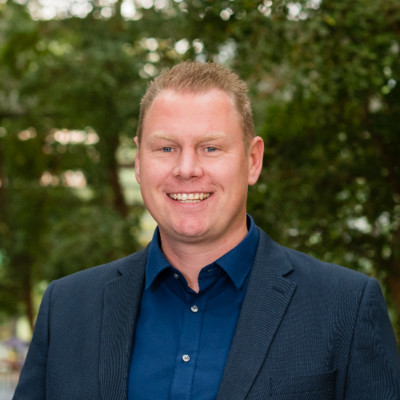
Mattis Nordström's earliest memory of the family business is lying in flower packing boxes on cold mornings, building castles before the greenhouse had woken up. "It was like my kindergarten. Like Lego, but big."


He is the second generation of M. Nordström AB, a tomato and cucumber grower in Närpes, western Finland. The company is one of 35 growers in Andelslaget Närpes Grönsaker, the cooperative that has shaped Finnish greenhouse growing since 1957.


His father founded the company. Mattis grew into it. The M comes from the first initial of both parents. Mattis grew into it rather than being pushed. For a while, he looked toward economics. The greenhouse kept pulling him back.

"When you grow up here, you see the grass is not greener on the other side. To see your food grow, to see that you're contributing something — that made the choice easy."

Outside work, he needs movement: golf, martial arts, evenings on the water with family. Inside the greenhouse, that same instinct becomes a way of reading. He starts every morning walking the rows, reading the crop before he reads a screen.

2 Nordstrom
3 Nordstrom

When Winter Becomes a Design Problem

Finland sits at Europe's northern edge. Between January and March, natural light in a Närpes greenhouse drops close to nothing. For tomatoes, a crop that converts light almost directly into fruit, artificial lighting is not optional. It is the growing season.


Finnish growers are among the world's most ambitious lighting users. High-intensity installations are a point of professional pride. The question is not how to keep plants alive through winter. It is how far they can be pushed without breaking their balance. "What drives us," Mattis says, "is really seeing what the plant can do." What changed in recent years was what it costs to do that.

4 Nordstrom

The Price of Light

For years, fixed electricity contracts made energy costs expensive but predictable. In 2022, predictability disappeared. Finnish spot prices began moving every 15 minute, sand for a greenhouse running high-intensity artificial lighting through a dark winter, those 15 minutes have a direct cost. Fixed contracts were no longer enough. The grower had become, effectively, a daily energy trader. Without the tools to trade well.

11A Nordstrom
11B Nordstrom
11C Nordstrom
11D Nordstrom
11E Nordstrom
11F Nordstrom
11G Nordstrom
11H Nordstrom

The conventional response was manual: pull tomorrow's price curve, cut lighting during the expensive hours, repeat. Reactive, time-consuming, and structurally flawed. Every lighting decision carried direct consequences for crop quality, yield, and delivery reliability. Miss an expensive hour and margins erode. Miss a cheap one and the crop falls short. The greenhouse had become a calculation too complex, and too consequential, to manage by hand.

"You can't sit behind your computer day and night trying to optimise the light," Mattis says. "When you put feelings into mathematical numbers, you don't come out on top competing with a computer."

6 Nordstrom
7 Nordstrom

The Grower Sets the Rules

Priva was already running the climate computer at M. Nordström AB when Mattis began looking for a solution. When he saw what Priva ECO was doing at a neighbouring operation for boiler modulation, the question followed naturally: if dynamic steering could work for heat, why not for light?


"They had the knowledge about the plant," he says. "Not just as any technical company. They really knew what our needs were." The first conversations began in 2024. The principle is straightforward: Priva ECO does not take control away from the grower. It works within the limits the grower defines.

Mattis sets the crop boundaries. Minimum and maximum light intensity, daily DLI targets, and a five-day planning window developed with the Priva team. Within that playing field, ECO calculates the most cost-efficient path to delivering exactly the light the crop needs, shifting hours toward cheaper and greener periods, compensating across days when needed, and doing it continuously, without manual input. The grower stays in control of the crop strategy. ECO handles the execution.

"You set the thresholds. Then Priva executes your orders in the best and cheapest way possible — always with respect for your crop."

Because ECO runs through Priva Connext and integrates with Priva One, a shift in the lighting plan automatically adjusts temperature, water, and CO₂. One variable moves. The greenhouse moves with it.

8 Nordstrom

The Winter That Proved It

After more than a year of use, the results are concrete. Energy cost savings run between 8 and 15 percent depending on the month. Compared with conventional lighting strategies in the region, the operation runs around 25% more efficiently on energy, not through reduced light, but through better timing of when it arrives.
There is a renewable layer built into the price logic. In Finland, electricity is cheapest when wind generation is high. Because ECO gravitates toward the cheapest hours, lighting naturally shifts toward greener periods. Sustainability enters through structure.


The deeper proof came during the most recent winter. When prices spiked across Finland, many operations faced a hard choice between energy costs and production. At M. Nordström AB, the five-day plan held. When a domestic tomato shortage followed, partly because other producers had scaled back, Mattis had the volume to meet it. Yield intact, deliveries on schedule, better prices per kilo. In a winter that squeezed many, his euros per square metre went up.

"It's a really strong weapon against gut feeling. Week after week, the plants always get the light they need — and the yield stays the same."

10 Nordstrom
9 Nordstrom

Green Fingers, and Something More

Mattis's mornings have changed. There is less time chasing price curves. More time walking the rows. More space to read the crop, speak with the team and stay close to the living part of the work. With Priva One bringing climate, irrigation, crop performance and processes into one place, the mental overhead has shrunk. The greenhouse runs. He runs the greenhouse.


His father is still part of the business. Still curious, never a brake on what comes next. The two generations are building something together. What Mattis will eventually pass on will look different from what he inherited.The values they share have stayed the same: care for the crop, responsibility to deliver, pride in doing the work properly. The method has evolved.


"You can't just survive on your green fingers anymore. You really have to get the whole picture." In Närpes, the picture rarely stays inside one greenhouse for long. One grower learns. Another watches. A system is tested. A winter is survived. Knowledge moves. The way it always has in this part of Finland.

5A Nordstrom
5G Nordstrom
5B Nordstrom
5I Nordstrom
5F Nordstrom
5J Nordstrom
5H Nordstrom
5C Nordstrom
5D Nordstrom
5E Nordstrom

In a place where light disappears for months, cultivation has always required invention. First came the family greenhouse. Then the cooperative. Then artificial light. Now light itself is being designed as a moving strategy.

In the dark, Mattis is still growing tomatoes. 
He is also growing a way to keep growing.